

90-DAY MONEY BACK GUARANTEE
If you’re not absolutely thrilled with the results, we will refund every single penny of your investment. No hassle.

FREE SHIPPING
We provide fast free shipping and handling for all orders.

GUARANTEED HIGH QUALITY
Made of high quality materials. Enjoy safe, consistent performance for a long time.
Your Knee Didn't Just "Wear Out." It Ran Out of Something First.
If You've Been Told You're Bone-on-Bone… The Grinding May Not Be Where Your Problem Started at All
Can I tell you the thing that finally made sense of mine?
Between the bones of your knee is a thick, slippery fluid. Doctors call it synovial fluid.
Forget the name. Think: honey.
It lets your bones glide. It cushions every step. It protects the cartilage between them.
And here's the part nobody slows down to explain: your knee doesn't just have this honey. It makes it.
Tiny living cells inside the joint produce and maintain it — like bees inside a beehive. And your knee is the hive.
When you're younger, it's one long summer in there. The bees work, fresh honey gets made, and whatever your knee uses up gets replaced.
Then inflammation builds — years of wear, old injuries, repeated stress — and inflammation changes the weather inside the joint.
Summer turns into winter. The bees stop working. Fresh honey stops being made.
But your knee keeps moving. Walking. Stairs. Chairs. So it lives off the honey it stored… a little less every day… with nothing replacing it.
Less honey, less cushion. Less cushion, and the cartilage takes the punishment. Step after step. For years.
That grinding you feel? That's a knee running low on honey.
And here's the part that made me feel crazy — the X-ray can't show any of it.
Your doctor looks at the film and says "bone-on-bone." He's telling the truth.
But he's showing you the last chapter. Not the cause.
Doctors already treat this fluid, by the way. One of the most common knee treatments is literally called a "gel injection" — hyaluronic acid, one of the slippery ingredients naturally found in your joint fluid, injected straight in. The shot itself is proof the fluid matters.
It just wears off. Because it pours borrowed honey into a hive that's still stuck in winter — and it never answers the question that actually matters:
Why did YOUR knee stop making its own?
Pills don't restart it. Cortisone doesn't restart it. Braces hold the outside while the inside stays frozen.
None of them touch the winter.
If You've Been Told You're Bone-on-Bone… The Grinding May Not Be Where Your Problem Started at All
Can I tell you the thing that finally made sense of mine?
Between the bones of your knee is a thick, slippery fluid. Doctors call it synovial fluid.
Forget the name. Think: honey.
It lets your bones glide. It cushions every step. It protects the cartilage between them.
And here's the part nobody slows down to explain: your knee doesn't just have this honey. It makes it.
Tiny living cells inside the joint produce and maintain it — like bees inside a beehive. And your knee is the hive.
When you're younger, it's one long summer in there. The bees work, fresh honey gets made, and whatever your knee uses up gets replaced.
Then inflammation builds — years of wear, old injuries, repeated stress — and inflammation changes the weather inside the joint.
Summer turns into winter. The bees stop working. Fresh honey stops being made.
But your knee keeps moving. Walking. Stairs. Chairs. So it lives off the honey it stored… a little less every day… with nothing replacing it.
Less honey, less cushion. Less cushion, and the cartilage takes the punishment. Step after step. For years.
That grinding you feel? That's a knee running low on honey.
And here's the part that made me feel crazy — the X-ray can't show any of it.
Your doctor looks at the film and says "bone-on-bone." He's telling the truth.
But he's showing you the last chapter. Not the cause.
Doctors already treat this fluid, by the way. One of the most common knee treatments is literally called a "gel injection" — hyaluronic acid, one of the slippery ingredients naturally found in your joint fluid, injected straight in. The shot itself is proof the fluid matters.
It just wears off. Because it pours borrowed honey into a hive that's still stuck in winter — and it never answers the question that actually matters:
Why did YOUR knee stop making its own?
Pills don't restart it. Cortisone doesn't restart it. Braces hold the outside while the inside stays frozen.
None of them touch the winter.
The "HoneyGlide" Wrap Goes After the Winter in 20 Minutes
It uses red and near-infrared light at two precise wavelengths at once — something no pill, injection, or brace does.
The moment you wrap it on:
That's the "HoneyGlide" effect — grinding on the way in, gliding on the way out — and why so many of us finally stopped collecting injection appointments.
Best part? Do it in your recliner. On the couch. In bed before you get up.
Wherever you are, it's 20 minutes.
I Went And Read The Studies Myself
I'm not a doctor. I'm somebody who got tired of being handed opinions, so I went and looked.
Red and near-infrared light has actually been studied in people with knee osteoarthritis — the same diagnosis sitting in your chart.
A 2019 meta-analysis in BMJ Open pulled together the randomized placebo-controlled trials and found that patients treated with this light reported significantly less pain than patients under a fake light — and here's the detail that stopped me: with the recommended doses, the improvement peaked two to four weeks after treatment. It builds. It's not a light switch.
A separate meta-analysis found that wavelengths in the 785–850nm range — the deeper-penetrating light this wrap uses — significantly reduced knee pain compared to sham treatment.
And I'll be straight with you, because I'd want somebody to be straight with me — the results across studies aren't uniform, the dose matters, and the big treatment guidelines haven't adopted this yet. Reviewers keep calling for larger trials.
That's the honest picture. Not a miracle. Not a cure.
Just the first thing anyone actually aimed at the winter.
What matters to me:
- Studied in people with knee osteoarthritis — not some other condition dressed up to sound close
- Works on the environment inside the joint, not just the pain signal
- No pills, no needles, no surgery date
- You keep it either way if it doesn't help
I Went And Read The Studies Myself
I'm not a doctor. I'm somebody who got tired of being handed opinions, so I went and looked.
Red and near-infrared light has actually been studied in people with knee osteoarthritis — the same diagnosis sitting in your chart.
A 2019 meta-analysis in BMJ Open pulled together the randomized placebo-controlled trials and found that patients treated with this light reported significantly less pain than patients under a fake light — and here's the detail that stopped me: with the recommended doses, the improvement peaked two to four weeks after treatment. It builds. It's not a light switch.
A separate meta-analysis found that wavelengths in the 785–850nm range — the deeper-penetrating light this wrap uses — significantly reduced knee pain compared to sham treatment.
And I'll be straight with you, because I'd want somebody to be straight with me — the results across studies aren't uniform, the dose matters, and the big treatment guidelines haven't adopted this yet. Reviewers keep calling for larger trials.
That's the honest picture. Not a miracle. Not a cure.
Just the first thing anyone actually aimed at the winter.
What matters to me:
- Studied in people with knee osteoarthritis — not some other condition dressed up to sound close
- Works on the environment inside the joint, not just the pain signal
- No pills, no needles, no surgery date
- You keep it either way if it doesn't help
Why It Works When Everything Else Failed
What the other things actually do:
That last one is the one I need you to hear.
If you did every exercise, iced every night, and the grinding still came back — you didn't fail. You were strengthening around a hive nobody ever warmed up.
KenRelief does the one thing none of them do:
- Reaches the joint itself, not just the skin over it
- Goes after the inflammation that IS the winter
- Gives your honey-making cells an environment where they can get back to work
Here's the thing nobody tells you. Your orthopedist answers questions about injections. The surgeon answers questions about surgery. The question of why your knee stopped making its own cushion — that never belonged to anybody.
Nobody hid this from us. It's just nobody's job.
Wrap it on. Press a few buttons. Let the season turn.
How KenRelief Works
Honestly the easiest part of this whole thing.
Then let 240 medical-grade LEDs work on the winter everybody else skipped.
One thing I wish someone had told me: this builds. One session feels good. It's around week two to four of daily use that most people notice the grinding and stiffness stop coming back the way they used to — which, if you read the studies section above, is exactly the window the research points to.
How KenRelief Works
Honestly the easiest part of this whole thing.
Then let 240 medical-grade LEDs work on the winter everybody else skipped.
One thing I wish someone had told me: this builds. One session feels good. It's around week two to four of daily use that most people notice the grinding and stiffness stop coming back the way they used to — which, if you read the studies section above, is exactly the window the research points to.

Try It for 90 Days, Completely Risk-Free
Here's the thing. You've been burned.
You've already spent money, time, and hope — and now you're staring down a decision you can't undo. The last thing you need is another $80 lesson.
So: 90-day "results or refund" guarantee.
Use it every day for 90 days, then decide based on what your knee actually feels like. If you're not waking up thinking "I can't believe how different this feels" — email us and we refund every penny.
No forms. No hassle. No questions asked. No store credit nonsense.
And you don't even have to send it back. Keep it. Give it to someone. We're not making you box up a thing that disappointed you.
You've had enough people look at an X-ray and tell you what your knee is. You won't have to prove anything to us.
- 90-Day Risk-Free Trial
NOTE: Not Available on Amazon or eBay
The Safer, Cheaper Choice — By a Long Way
Let's just compare what a year of this actually costs.
That last row is the one that stopped me cold. I'm not against the operation — for some knees, at the right time, it's genuinely the answer. But it's the one row you can't undo. And a permanent decision deserves to be made from your knee's best week — not its worst one.
What Our Customers Have To Say

Danny got his evenings back…
"Bone-on-bone in my right knee for three years. The first cortisone shot bought me four months. The last one barely bought me three weeks — and I could see where that road was going. Four weeks of using this every evening and the grinding going up my front steps has quieted down to where I'm not planning the climb before I start it. If surgery's still in my future, fine — but it'll be on my timeline now. I ordered a second one for my wife's knee."
Danny M. — Houston, TX

Connie stopped waking up at 2 AM…
"I'm a nurse — on my feet 10 to 12 hours a day — and I've been told both knees are heading toward replacement. The night aching was the worst part. Whatever position I found, my knees found me. I've used the KenRelief wrap every day for 2.5 weeks and I haven't been woken up once. I'm actually sleeping through. If you're on the fence, just try it."
Connie H. — Cincinnati, OH

Gay stopped believing this was just her life now…
"I'd completely accepted the stiffness and grinding as permanent. Insurance wouldn't cover another round of gel shots and I wasn't going to keep paying cash for something that faded by Thanksgiving. Twice a day, 15 minutes, since early spring. The swelling is down, the stiffness is down, and I knelt in my garden this year. I cannot thank you enough."
Gay S. — Webb City, MO
3 Simple Steps to Relieve Knee Pain at Home!
Simply lay back and enjoy relief!
STEP 1
Plug it into an outlet or a portable charger. No charger? The cable's 3–4 ft, plenty of room to sit comfortably.
STEP 2
Connect the LED panel and wrap it around your knee. Bare skin gets it deepest — right over the incision area is fine.
STEP 3
Choose your light mode, intensity, and session length. Then relax while it works on the tissue around your joint.
What Makes KenRelief Better?

Claim Your Discounted KenRelief Red Light Therapy Wrap Below While Stock Lasts

Special Offer On Now
Try Your KenRelief Red Light Therapy Knee Wrap NOW Risk-Free at an All Time Low Price!
Act Now and You'll Get:
- 50% OFF – KenRelief Red Light Therapy Wrap (Instruction Manual Included)
- 90 Day Results or Refund Guarantee
- FREE Charging Kit + Remote Control + Velcro Straps + Gift Box - valued at $84
- FREE Knee Pain Relief Patches (12x) - valued at $39 (when you get 2 or more wraps)
- FREE 30 Day Knee Pain Relief Plan - valued at $19 (when you get 2 or more wraps)
NOTE: Not Available on Amazon or eBay
100% SATISFACTION 90-DAY MONEY BACK GUARANTEE

Your order today is protected by our iron-clad 90-day 100% money back guarantee. If your knee doesn't feel looser, if the stiffness doesn't ease, if you're not moving with more comfort than you have in months — let us know any time in the next 90 days and we refund every single penny. No questions asked. No store credit. And you don't have to return the wrap.
Frequently Asked Questions
Will this work if I'm already bone-on-bone?
That's the question I asked first, because "bone-on-bone" sounds like the end of the conversation. It's meant to.
Here's how I think about it now. Red light does not regrow cartilage, and it does not erase your X-ray — anyone who tells you otherwise is selling you something they can't back up.
But your X-ray shows how much honey you've lost. It says nothing about whether your bees can get back to work.
The grinding, the stiffness, the swelling — those live in the environment of your joint, not just its structure. And the environment is what this goes after.
I'll be honest about the research, too: most of the studies looked at people with mild to moderate arthritis. Nobody's handed me a stack of trials on end-stage knees, and I won't pretend they have. What I can tell you is that the people I hear from who were told "bone-on-bone" are exactly the ones who'd stopped expecting anything to help — and they're the ones writing the longest letters.
Ninety days, and you keep it either way. That's a low-cost way to find out what YOUR knee does.
How soon will I notice a difference?
Most people feel something warm and loosening during the very first session. That part's immediate.
But I don't want to oversell that, because the first session isn't the point. This builds.
The honest timeline is two to four weeks of daily use before the change sticks — before the grinding stops being the first thing you think about on the stairs, before the morning stiffness stops setting the tone for your day. And that's not me guessing: the strongest study data shows improvement peaking in exactly that two-to-four-week window.
What I'd tell you to watch for isn't a dramatic moment. It's the small stuff. You get out of the car without planning it. You realize you slept through and didn't notice. You went up the stairs without the railing and only remembered afterward.
That's how it shows up. Quietly, and then all at once when you look back.
What's the ideal session length?
20 to 30 minutes is the sweet spot, and 30 is where I'd land once you're used to it.
If you're just starting, do 10 or 15 the first few times and see how your knee responds. There's no prize for jumping straight to the maximum.
Set it and forget it — it shuts off on its own when the timer runs out, so you're not lying there watching a clock.
Is it safe to use multiple times a day, or longer than 20 minutes?
Multiple times a day is fine and it's what a lot of us do. Morning and evening is the most common rhythm. Some people do a third session before bed if the aching is worst at night.
Longer than 30 minutes in one sitting doesn't get you more. The tissue absorbs what it absorbs. Two 20-minute sessions spread across the day does more for you than one 40-minute marathon.
A few genuine cautions, because I'd rather you hear them from me than find out on your own:
- Don't look directly into the LEDs. It's bright. Point it at your knee, not your face.
- If you're on medication that makes you sensitive to light — some antibiotics, some acne and heart medications do this — check with your doctor first. It's a real interaction, not a formality.
- If you're pregnant, being treated for cancer, or have any active infection in the joint, ask your doctor before you start. Especially the infection one. If your knee is red, hot, or you're running a fever, that is not an arthritis problem and you need to be seen, not wrapped.
Can I use this alongside my injections — or instead of them?
Alongside — and that's not me being cagey, it's me being honest about lanes.
The wrap doesn't interfere with cortisone, gel injections, or anything else your doctor has you on. Light and injections work on the knee in completely different ways, and there's no interaction between them.
Should you stop your injections? That's a conversation for your doctor, not a sales page — and I'd side-eye any product that told you otherwise.
What I'll say is this: a lot of us started using the wrap between appointments, kept every appointment on the calendar, and then let the calendar tell the story. When your next follow-up rolls around, you and your doctor will both be looking at the same knee. Let it speak for itself.
Are there any age or health restrictions?
No upper age limit. Plenty of people using this are in their seventies and eighties — that's most of who this was built for.
The situations where you should talk to your doctor before starting:
- You're pregnant
- You're in treatment for cancer, or have a known tumor in the area
- You take a photosensitizing medication (again: some antibiotics, some heart and acne medications)
- You have a suspected or confirmed infection in the joint
- You have a condition affecting sensation in your legs — diabetic neuropathy, for instance — where you might not feel warmth building the way you normally would
Arthritis in other joints is not a problem. Neither is an old meniscus repair or hardware from a previous procedure. This isn't a magnet or a microwave. It's light.
What are the dimensions of the LED pad and strap?
The main pad is 16.1 inches by 7.9 inches (about 41 cm × 20 cm), with 240 medical-grade LEDs across it. That's big enough to cover the front and sides of the knee in one go — you're not treating one small patch and hoping you picked the right spot.
The elastic strap is 35.2 inches by 4 inches (about 89 cm × 10 cm), and it stretches. That's the part that matters if your knee is swollen or your legs are on the larger side — it fits comfortably either way, and it stays put once it's on. You're not holding it in place for twenty minutes.
The power cable is 3–4 feet, which is enough to sit comfortably in a chair beside an outlet. If you'd rather not be tethered, a portable battery pack works and lets you use it anywhere — that's sold separately.
What are the different settings?
Three things you control, all from the remote:
Wavelength. 660nm (red), 850nm (near-infrared), or both together. Red works closer to the surface, near-infrared goes deeper. Run both. For a knee that's bone-on-bone you want the depth, and there's no reason to pick one.
Intensity. Levels 1 through 4, with 4 the strongest. Start at 1 or 2 for your first week, then move up. Level 4 isn't a badge of honor and rushing to it doesn't speed anything up.
Time. 5 to 30 minutes in 5-minute steps. It shuts itself off.
That's the whole thing. Three buttons. My husband figured it out without reading anything, which tells you something.
Can I use it on other joints?
Yes. That strap is nearly three feet of stretch, so anywhere you can wrap it works — shoulder, elbow, lower back, hip, ankle, wrist, hands.
I bought mine for my knee and now my husband steals it for his shoulder most evenings, which is genuinely the reason I ended up ordering a second one. Worth thinking about before you buy just one.
What if it doesn't work for me?
Then you email us at info@kenrelief.com, say it didn't work, and we refund every penny.
No forms. No questions. No store credit. No "did you use it correctly" conversation.
And you don't send it back. Keep it. Pass it to someone who might get more out of it. We're not going to make you box up something that let you down and stand in line at the post office.
I'm going to say the quiet part out loud: you've already had enough people look at an X-ray and tell you there was only one road left. You're not going to have to prove anything to us.
What is your return policy?
90 days from the day it arrives. Use it every single day for those 90 days — that's the only thing I'd ask, because two weeks isn't a fair test of something that works cumulatively.
If it hasn't changed anything by then, email info@kenrelief.com. Full refund, processed within 48 hours, no questions, and the wrap stays with you.
Zero risk on your end. The only thing you can lose here is 90 days you were going to spend the same way anyway.
Customer Reviews
As I mentioned in the last message, I start the 20 min process and for an hour or two after it ends my knee feels better, then it slowly goes back to the constant tooth ache feeling...
it is helping
It’s for my wife Grace. She faithfully users it twice daily. Gradually some improvements
I ordered for my wife
She can’t believe what a difference it makes
She has used for a week plus now and her knees look like knees again
Thank u so much
I havent used them long enough to know if it works. As for the units themselves, they seem to be well made and easy to use. The instructions could be a little better.
Been using it for several days and I've noticed an improvement in my knee pain. It has helped me a lot; I recommend it. It helps with joint pain.
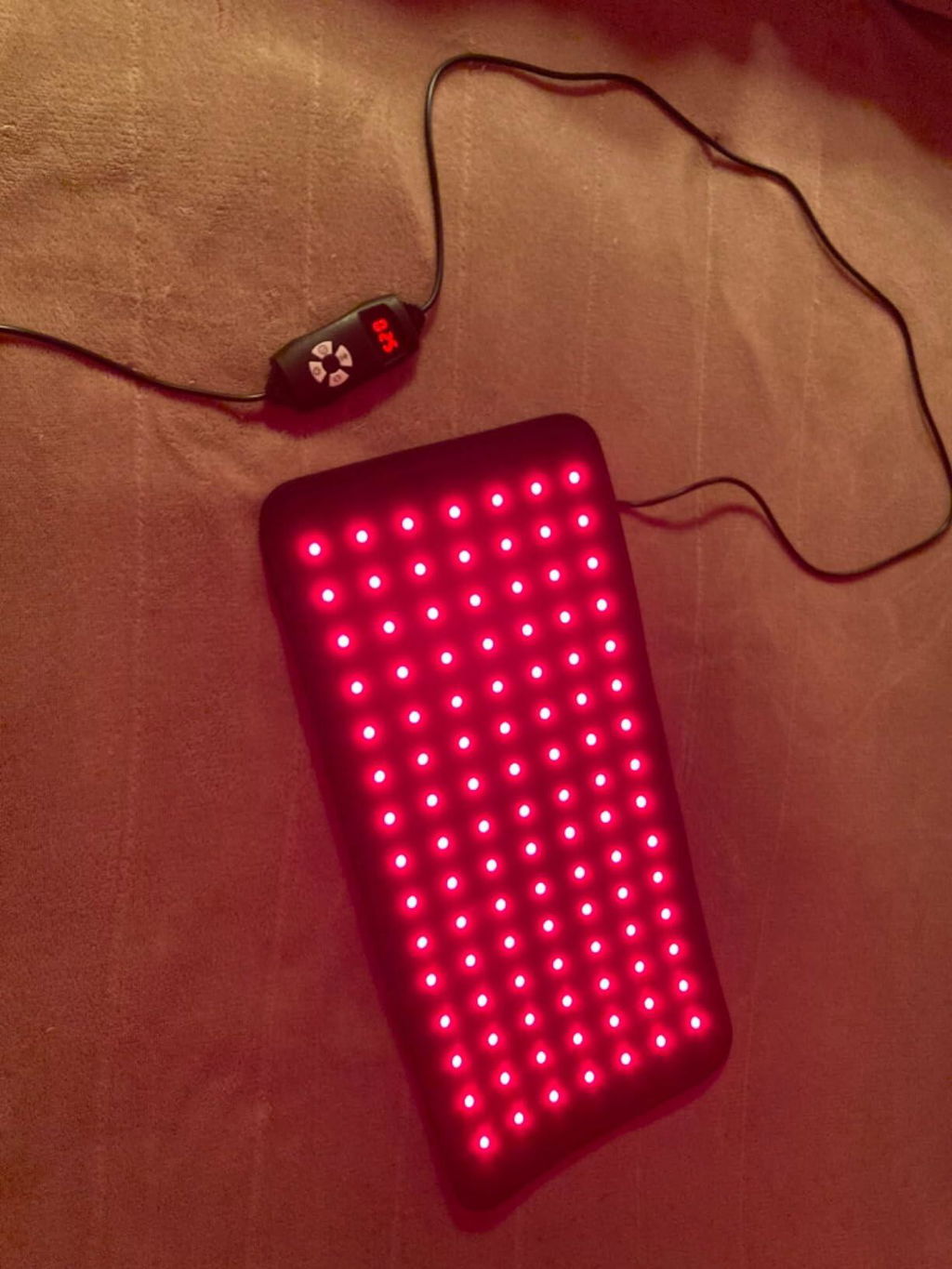
This red light therapy pad delivers soothing, deep NIR relief. The 660 nm and 850 nm lights help ease back, knee, and muscle pain. Portable, easy to use, and great for home therapy.
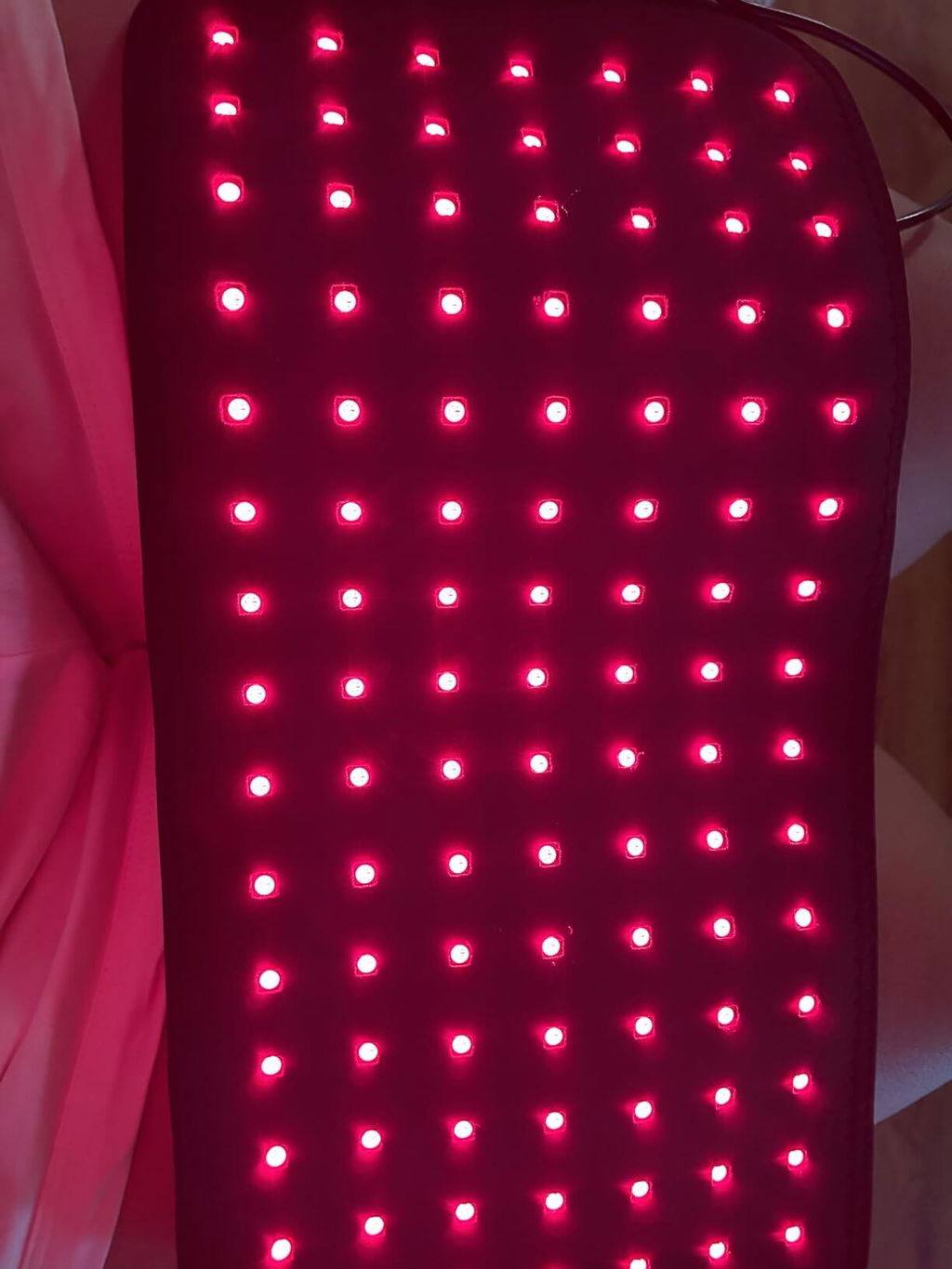
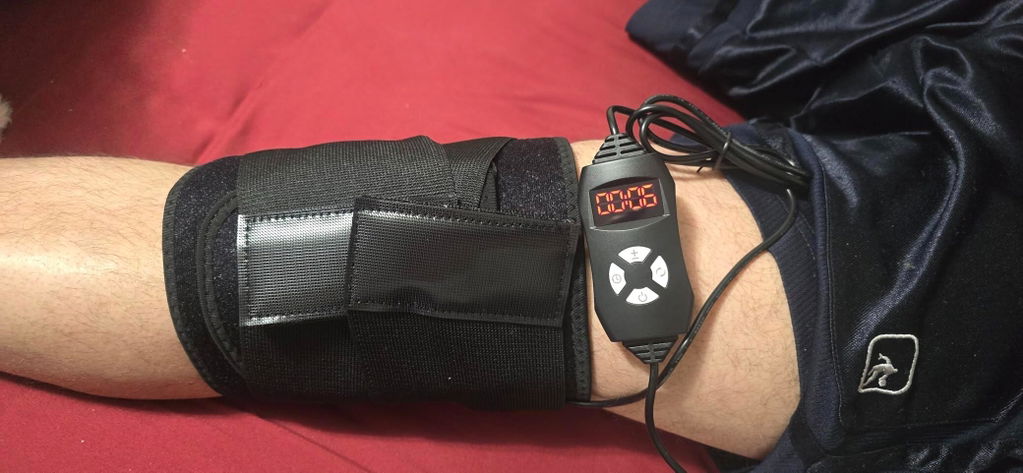
I started using it because I have pain in my knee, and since then I've felt so much relief. The heat and red light therapy help a lot—it feels relaxing and soothing right away. It also comes with a clear manual that makes it very easy to use. I'm really happy with this purchase and definitely recommend it.