

90-DAY MONEY BACK GUARANTEE
If you’re not absolutely thrilled with the results, we will refund every single penny of your investment. No hassle.

FREE SHIPPING
We provide fast free shipping and handling for all orders.

GUARANTEED HIGH QUALITY
Made of high quality materials. Enjoy safe, consistent performance for a long time.
Your New Knee Can Bend. It's Everything Swollen Around It That Can't.
If You're Weeks Out and Still Stiff, Still Swollen, Still Behind Where You Expected to Be… You May Not Be Behind at All
Can I tell you the thing that finally made sense of mine?
Think about the last time you badly jammed a finger.
Within minutes it's puffy. Tight. And suddenly you can't bend it — not even close.
Nothing broke. The hinge inside that finger works perfectly. Everything around the hinge swelled up.
That's what's happening at your knee right now.
Because to put that new joint in, they had to cut through the living tissue around it. Muscle. Capsule. Lining. All of it moved and stitched back.
That tissue swells afterward. Completely normal. That's your body doing exactly what it's supposed to do.
The problem is that swelling takes up room.
And now every time you bend — at therapy, getting into the car, standing up off the couch — you're not just bending a joint. You're bending it through all of that.
That's the tight band. The fullness. The heaviness. The feeling that something is physically blocking you halfway through the bend.
I call it the Swelling Lock. And here's what made me feel crazy at week six — you often can't see all of it. Some of it sits deep, in and around the joint itself.
So you look down and think, "it's not even that swollen today."
Your surgeon looks at the film and says, "everything looks great."
You're both telling the truth. And your knee still feels like it's wrapped in a winter coat you can't take off.
Researchers who measured swelling after knee replacement found it was still well above pre-surgery levels at ten weeks in the overwhelming majority of patients. Only a small fraction had returned to where they started.
Read that again if you've been quietly wondering whether you're the slow one.
You are not behind for being swollen at week eight. You're normal. But normal doesn't mean nothing can be done about it — and that's the part nobody ever gets around to telling you.
If You're Weeks Out and Still Stiff, Still Swollen, Still Behind Where You Expected to Be… You May Not Be Behind at All
Can I tell you the thing that finally made sense of mine?
Think about the last time you badly jammed a finger.
Within minutes it's puffy. Tight. And suddenly you can't bend it — not even close.
Nothing broke. The hinge inside that finger works perfectly. Everything around the hinge swelled up.
That's what's happening at your knee right now.
Because to put that new joint in, they had to cut through the living tissue around it. Muscle. Capsule. Lining. All of it moved and stitched back.
That tissue swells afterward. Completely normal. That's your body doing exactly what it's supposed to do.
The problem is that swelling takes up room.
And now every time you bend — at therapy, getting into the car, standing up off the couch — you're not just bending a joint. You're bending it through all of that.
That's the tight band. The fullness. The heaviness. The feeling that something is physically blocking you halfway through the bend.
I call it the Swelling Lock. And here's what made me feel crazy at week six — you often can't see all of it. Some of it sits deep, in and around the joint itself.
So you look down and think, "it's not even that swollen today."
Your surgeon looks at the film and says, "everything looks great."
You're both telling the truth. And your knee still feels like it's wrapped in a winter coat you can't take off.
Researchers who measured swelling after knee replacement found it was still well above pre-surgery levels at ten weeks in the overwhelming majority of patients. Only a small fraction had returned to where they started.
Read that again if you've been quietly wondering whether you're the slow one.
You are not behind for being swollen at week eight. You're normal. But normal doesn't mean nothing can be done about it — and that's the part nobody ever gets around to telling you.
The "SwellRelease" Wrap Works On That Swelling in 20 Minutes
It uses red and near-infrared light at two precise wavelengths at once — something no pill, ice pack, or compression sleeve does.
The moment you wrap it on:
That's the "SwellRelease" effect — and it's why so many of us stopped white-knuckling our way through the bend and started making actual room for it.
Best part? Do it in your recliner. On the couch. In bed before you get up — which, if your mornings are anything like mine were, is exactly when you need it.
Wherever you are, it's 20 minutes.
I Went And Read The Studies Myself
I'm not a doctor. I'm somebody who got tired of being handed opinions, so I went and looked.
And here's what surprised me: it's been studied in exactly our situation — people recovering from a knee replacement. In a randomized clinical trial, patients treated with this light had less pain, less swelling, and better range of motion than patients who weren't — measured at several follow-ups.
A 2025 review found the same pattern repeating across the available studies: less pain, less swelling, better early function and movement.
And I'll be straight with you, because I'd want somebody to be straight with me — those same reviewers said the evidence is still limited and bigger trials are needed.
That's the honest picture. Not a miracle. Not a shortcut.
Just the first thing anyone actually aimed at the swelling.
What mattered to me:
- Studied in post-replacement patients, in the early recovery window — not just arthritis knees
- Works on the swollen tissue, not the implant
- Fits around your therapy instead of competing with it
- No pills, no needles, nothing extra to schedule
- You keep it either way if it doesn't help
I Went And Read The Studies Myself
I'm not a doctor. I'm somebody who got tired of being handed opinions, so I went and looked.
And here's what surprised me: it's been studied in exactly our situation — people recovering from a knee replacement. In a randomized clinical trial, patients treated with this light had less pain, less swelling, and better range of motion than patients who weren't — measured at several follow-ups.
A 2025 review found the same pattern repeating across the available studies: less pain, less swelling, better early function and movement.
And I'll be straight with you, because I'd want somebody to be straight with me — those same reviewers said the evidence is still limited and bigger trials are needed.
That's the honest picture. Not a miracle. Not a shortcut.
Just the first thing anyone actually aimed at the swelling.
What mattered to me:
- Studied in post-replacement patients, in the early recovery window — not just arthritis knees
- Works on the swollen tissue, not the implant
- Fits around your therapy instead of competing with it
- No pills, no needles, nothing extra to schedule
- You keep it either way if it doesn't help
Why It Helps When Everything Else Only Half-Works
What the other things actually do:
That last one is the one I need you to hear.
If you're doing every exercise, every day, exactly as told — and the number on the ruler still isn't moving the way you hoped — you are not failing. You may just be trying to bend a joint that's got nowhere to go.
That's what the wrap is for. It doesn't replace your therapy. It gives your therapy more room to work.
KenRelief does the one thing the ice pack and the sleeve can't:
- Reaches the swollen tissue around the joint, not just the skin
- Works on the inflammatory activity driving the swelling
- Lets that tissue take up less space, so your knee has somewhere to bend into
Most people are still measurably swollen at ten weeks. Almost nobody is told that in advance.
Nobody hid it from you. Your surgeon was answering a question about the implant. Your therapist was answering a question about degrees. The swelling in between just never quite belonged to anybody.
Wrap it on. Press a few buttons. Let it settle.
How KenRelief Works
Honestly the easiest part of this whole thing — which, at week six, matters more than it sounds.
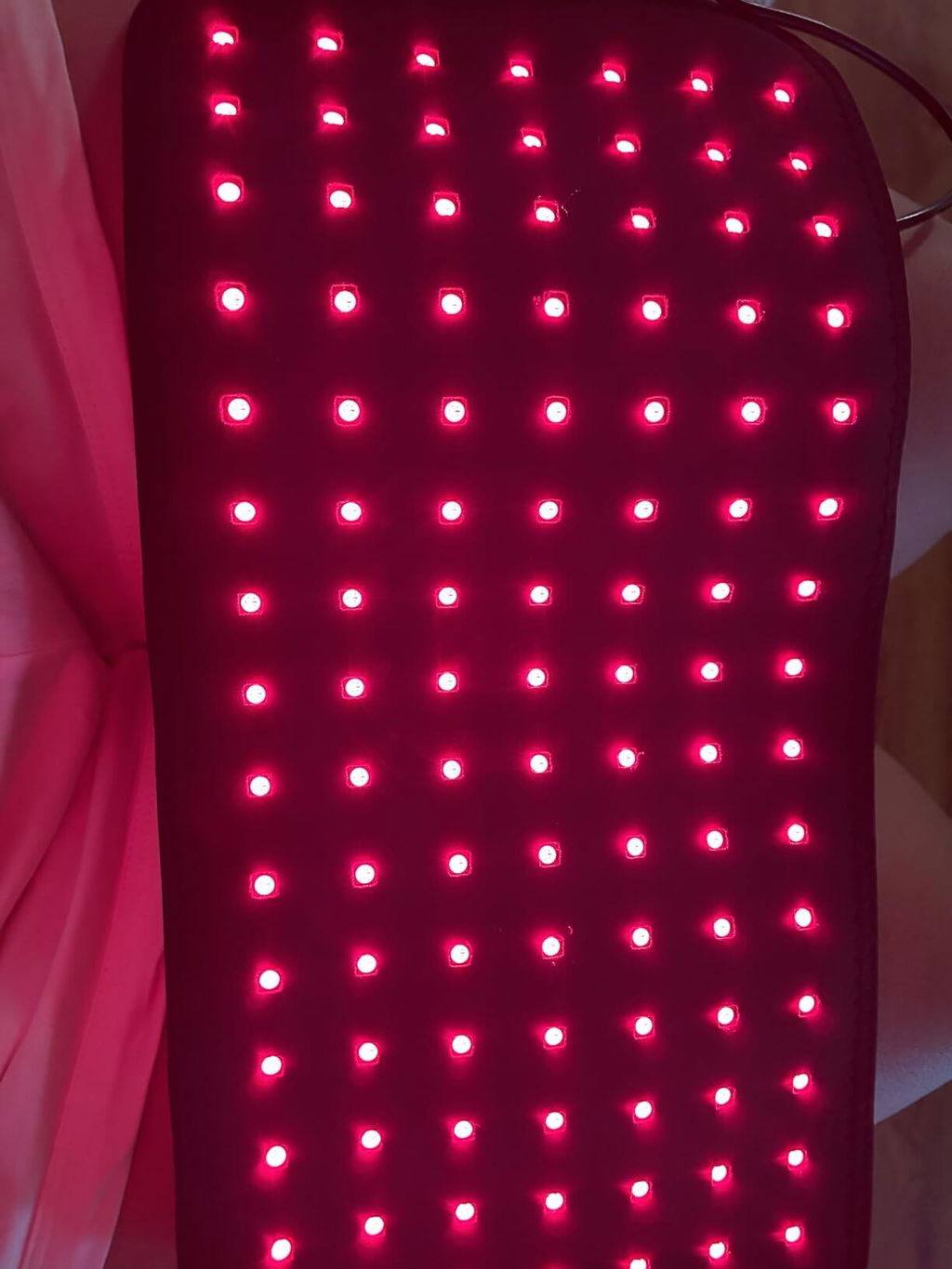
Then let 240 medical-grade LEDs work on the swelling everybody else just told you to ice.
One thing I wish someone had told me: this builds. One session feels good. It's around week two to four of daily use that most people notice the tightness stops rebuilding by evening the way it used to.
How KenRelief Works
Honestly the easiest part of this whole thing — which, at week six, matters more than it sounds.
Then let 240 medical-grade LEDs work on the swelling everybody else just told you to ice.
One thing I wish someone had told me: this builds. One session feels good. It's around week two to four of daily use that most people notice the tightness stops rebuilding by evening the way it used to.

Try It for 90 Days, Completely Risk-Free
Here's the thing. You've already spent a lot.
Money, time, hope, and one operation you can't undo — and you're still in the middle of it. The last thing you need right now is another $80 lesson.
So: 90-day "results or refund" guarantee.
Use it every day for 90 days — which, from where you're sitting, takes you most of the way through the recovery anyway — then decide based on what your knee actually feels like. If it hasn't made a difference you can feel, email us and we refund every penny.
No forms. No hassle. No questions asked. No store credit nonsense.
And you don't even have to send it back. Keep it. Give it to someone. We're not making you box up a thing that disappointed you.
You've had to explain your knee to enough people already. You won't have to explain it to us.
- 90-Day Risk-Free Trial
NOTE: Not Available on Amazon or eBay
The Safer, Cheaper Choice — By a Long Way
Let's just compare what a year of this actually costs.
That last row is the one that stopped me cold. Not because anybody's suggesting you'll need it — you almost certainly won't. But it's the thought that shows up at 3 AM when the knee is aching and nobody's around to talk you down. Twenty minutes a day and eighty dollars is a very small thing to put between you and that thought.
What Our Customers Have To Say

Danny got his evenings back…
"Nine weeks out and my knee still felt like it had a strap around it by dinnertime. Every appointment, same answer — hardware's perfect, keep at it. The swelling has finally come down and I can get in and out of the car without planning the movement first. My therapist noticed before I said anything."
Danny M. — Houston, TX

Connie stopped waking up at 2 AM…
"I'm a nurse, so I thought I knew what I was in for. Seven weeks post-op and I was still waking up at two in the morning with that swollen, tight feeling and then lying there doing the math on how far behind I was. I've used the KenRelief wrap every day for 2.5 weeks and I haven't been woken up once. If you're on the fence, just try it."
Connie H. — Cincinnati, OH

Gay stopped dreading the ruler…
"At five weeks I'd started to believe this was just how my knee was going to be. My bend was stuck and I was pushing harder and getting nowhere. Twice a day, 15 minutes. The swelling came down, the bend started moving again, and I stopped feeling sick to my stomach on therapy mornings. I cannot thank you enough."
Gay S. — Webb City, MO
3 Simple Steps to Relieve Knee Pain at Home!
Simply lay back and enjoy relief!
STEP 1
Plug it into an outlet or a portable charger. No charger? The cable's 3–4 ft, plenty of room to sit comfortably.
STEP 2
Connect the LED panel and wrap it around your knee. Bare skin gets it deepest — right over the incision area is fine.
STEP 3
Choose your light mode, intensity, and session length. Then relax while it works on the tissue around your joint.
What Makes KenRelief Better?

Claim Your Discounted KenRelief Red Light Therapy Wrap Below While Stock Lasts

Special Offer On Now
Try Your KenRelief Red Light Therapy Knee Wrap NOW Risk-Free at an All Time Low Price!
Act Now and You'll Get:
- 50% OFF – KenRelief Red Light Therapy Wrap (Instruction Manual Included)
- 90 Day Results or Refund Guarantee
- FREE Charging Kit + Remote Control + Velcro Straps + Gift Box - valued at $84
- FREE Knee Pain Relief Patches (12x) - valued at $39 (when you get 2 or more wraps)
- FREE 30 Day Knee Pain Relief Plan - valued at $19 (when you get 2 or more wraps)
NOTE: Not Available on Amazon or eBay
100% SATISFACTION 90-DAY MONEY BACK GUARANTEE

Your order today is protected by our iron-clad 90-day 100% money back guarantee. If your knee doesn't feel looser, if the pressure doesn't ease, if you're not moving with more comfort than you have in months — let us know any time in the next 90 days and we refund every single penny. No questions asked. No store credit. And you don't have to return the wrap.
⚠️ One Important Note Before You Order
This is for the ordinary frustration of a recovery that feels slower, stiffer and more swollen than you expected. It is not for diagnosing a new problem.
If your swelling is suddenly increasing, if you have calf pain or tenderness, redness or warmth spreading, drainage from the incision, a fever, chest pain or shortness of breath — that is not a Swelling Lock and it is not something to wrap. Call your surgical team today. Please don't wait, and please don't order something instead.
I'd rather lose the sale than have you sit on something that needs a phone call.
Frequently Asked Questions
My surgery was only a few weeks ago. Is it too soon?
That's the question I asked first, because I was seven weeks out and half convinced I'd missed some window everyone else knew about.
Here's how I think about it. The swelling in and around your joint isn't on a schedule — it comes down when it comes down. Most people are still measurably swollen at ten weeks. If you're in that window, the swelling is there right now, taking up room right now, and that's exactly what this works on.
The one real limit is your incision. If it's still open, scabbed, weeping, or only just closed, wait — and clear it with your surgeon before you start. Once it's fully healed, you're fine.
And if you're further out than twelve weeks and still fighting it, this isn't too late either. The swelling either settled down or it didn't.
Ninety days, and you keep it either way. That's a low-cost way to find out.
How soon will I notice a difference?
Most people feel something warm and loosening during the very first session. That part's immediate.
But I don't want to oversell that, because the first session isn't the point. This builds.
The honest timeline is two to four weeks of daily use before the change sticks — before the tightness stops rebuilding by evening, before the morning stiffness stops being the first thing you think about.
And I'd gently suggest not judging it by the ruler alone. I know the number feels like the whole scoreboard right now. It isn't. Watch for the small stuff: getting out of the car without planning it. Sleeping through. Standing up after dinner without that first awful few steps.
That's how it shows up. Quietly, and then all at once when you look back.
Will this slow down or replace my physical therapy?
No — and please don't let it. Your therapy is the part that actually rebuilds the knee. Keep every appointment and keep doing what they tell you.
This is meant to sit alongside it. The reasoning is simple: the less swollen tissue you're bending through, the more you get out of each session.
A lot of people use it for twenty minutes before therapy, and again in the evening after. If your therapist has an opinion about timing, follow theirs over mine — they can see your knee and I can't.
What's the ideal session length?
20 to 30 minutes is the sweet spot, and 30 is where I'd land once you're used to it.
If you're just starting, do 10 or 15 the first few times and see how your knee responds. There's no prize for jumping straight to the maximum.
Set it and forget it — it shuts off on its own when the timer runs out, so you're not lying there watching a clock.
Is it safe to use multiple times a day, or longer than 20 minutes?
Multiple times a day is fine and it's what a lot of us do. Morning and evening is the most common rhythm. Some people do a third session before bed if the aching is worst at night — and in this stretch of recovery, it very often is.
Longer than 30 minutes in one sitting doesn't get you more. The tissue absorbs what it absorbs. Two 20-minute sessions spread across the day does more for you than one 40-minute marathon.
A few genuine cautions, because I'd rather you hear them from me than find out on your own:
- Don't look directly into the LEDs. It's bright. Point it at your knee, not your face.
- If you're on medication that makes you sensitive to light — some antibiotics, some acne and heart medications do this — check with your doctor first. It's a real interaction, not a formality.
- If you're pregnant, being treated for cancer, or have any suspicion of infection in the joint, ask your doctor before you start. Especially the infection one. If your knee is red, hot, draining, or you're running a fever, that is not a swelling problem and you need to be seen, not wrapped.
Can I use it over my incision?
Only once it's fully closed and healed — then yes, and that's exactly where you want it.
If your surgery is recent and anything is still open, scabbed, weeping, or freshly closed, wait. Ask your surgeon at your next appointment; it's a thirty-second question and they'll give you a straight answer.
Once you're cleared, go right over it. Bare skin gets the light deeper than going through a pant leg. New scar tissue can be more sensitive than the skin around it, so if it feels like a lot at first, start at Level 1 or 2 and put a thin shirt between you and the pad for the first few sessions. Work up from there.
Are there any age or health restrictions?
No upper age limit. Plenty of people using this are in their seventies and eighties — that's most of who this was built for.
The situations where you should talk to your doctor before starting:
- You're pregnant
- You're in treatment for cancer, or have a known tumor in the area
- You take a photosensitizing medication (again: some antibiotics, some heart and acne medications)
- You have a suspected or confirmed infection in the joint
- You have a condition affecting sensation in your legs — diabetic neuropathy, for instance — where you might not feel warmth building the way you normally would
The metal in your knee is not a problem. This isn't a magnet or a microwave. It's light. It doesn't heat the implant.
What are the dimensions of the LED pad and strap?
The main pad is 16.1 inches by 7.9 inches (about 41 cm × 20 cm), with 240 medical-grade LEDs across it. That's big enough to cover the front and sides of the knee in one go — you're not treating one small patch and hoping you picked the right spot.
The elastic strap is 35.2 inches by 4 inches (about 89 cm × 10 cm), and it stretches. That matters more than usual at this stage, because your operated knee is probably still noticeably bigger than the other one. It fits comfortably either way, and it stays put once it's on. You're not holding it in place for twenty minutes.
The power cable is 3–4 feet, which is enough to sit comfortably in a chair beside an outlet. If you'd rather not be tethered — or you're still spending a lot of time with the leg up — a portable battery pack works and lets you use it anywhere. That's sold separately.
What are the different settings?
Three things you control, all from the remote:
Wavelength. 660nm (red), 850nm (near-infrared), or both together. Red works closer to the surface, near-infrared goes deeper. Run both. For a recovering knee you want the depth, and there's no reason to pick one.
Intensity. Levels 1 through 4, with 4 the strongest. Start at 1 or 2 for your first week, then move up. Level 4 isn't a badge of honor and rushing to it doesn't speed anything up — which, I know, is the opposite of everything you've been told about recovery.
Time. 5 to 30 minutes in 5-minute steps. It shuts itself off.
That's the whole thing. Three buttons. My husband figured it out without reading anything, which tells you something.
Can I use it on other joints?
Yes. That strap is nearly three feet of stretch, so anywhere you can wrap it works — shoulder, elbow, lower back, hip, ankle, wrist, hands.
Worth mentioning because your other knee, your back, and your hips have all been quietly taking on extra work since your surgery, and most of us end up hurting somewhere new because of it. I bought mine for the operated knee and now my husband steals it for his shoulder most evenings, which is genuinely why I ended up ordering a second one.
What if it doesn't work for me?
Then you email us at info@kenrelief.com, say it didn't work, and we refund every penny.
No forms. No questions. No store credit. No "did you use it correctly" conversation.
And you don't send it back. Keep it. Pass it to someone who might get more out of it. We're not going to make you box up something that let you down and stand in line at the post office — which, right now, is not a trip you need.
I'm going to say the quiet part out loud: you've spent weeks having your knee assessed, measured, and pronounced on by people who then send you home to deal with it. You're not going to have to prove anything to us.
What is your return policy?
90 days from the day it arrives. Use it every single day for those 90 days — that's the only thing I'd ask, because two weeks isn't a fair test of something that works cumulatively.
If it hasn't changed anything by then, email info@kenrelief.com. Full refund, processed within 48 hours, no questions, and the wrap stays with you.
Zero risk on your end. The only thing you can lose here is 90 days you were going to spend recovering anyway.
Customer Reviews
So far it has been amazing. I have severe knee pain. The pain decreased almost immediately.
As I mentioned in the last message, I start the 20 min process and for an hour or two after it ends my knee feels better, then it slowly goes back to the constant tooth ache feeling...
it is helping
It’s for my wife Grace. She faithfully users it twice daily. Gradually some improvements
I ordered for my wife
She can’t believe what a difference it makes
She has used for a week plus now and her knees look like knees again
Thank u so much
I havent used them long enough to know if it works. As for the units themselves, they seem to be well made and easy to use. The instructions could be a little better.
Been using it for several days and I've noticed an improvement in my knee pain. It has helped me a lot; I recommend it. It helps with joint pain.
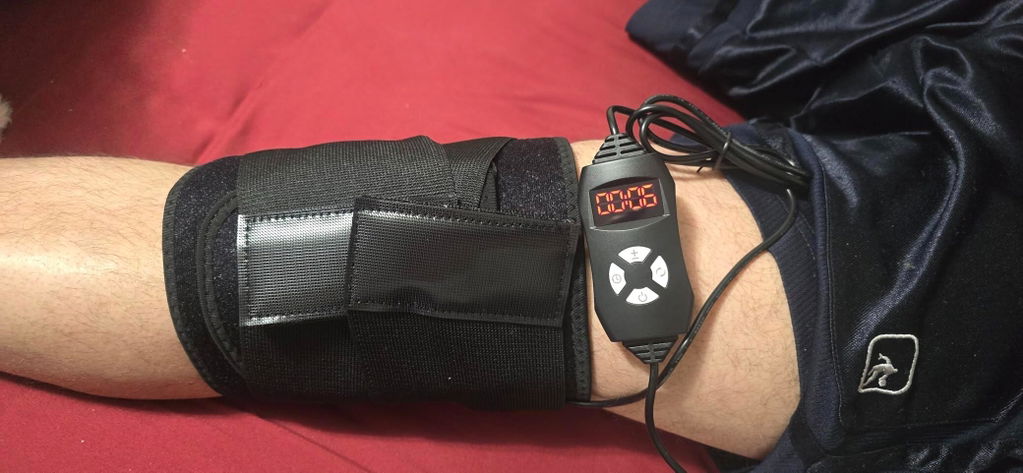
This red light therapy pad delivers soothing, deep NIR relief. The 660 nm and 850 nm lights help ease back, knee, and muscle pain. Portable, easy to use, and great for home therapy.